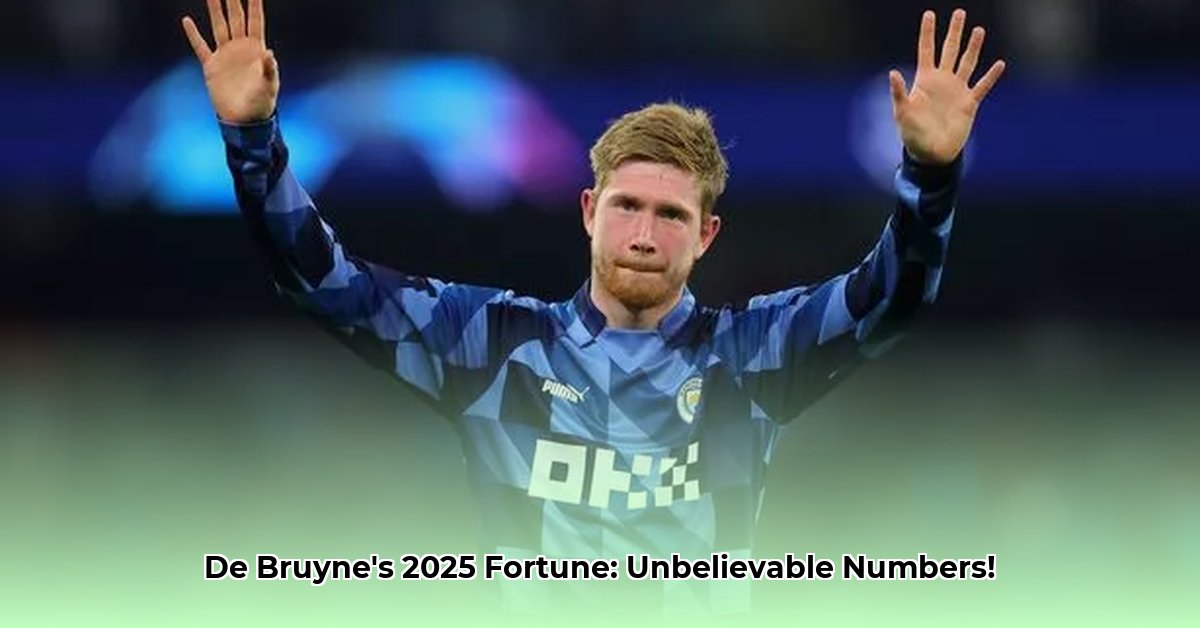
De Bruyne's Manchester City Salary and Bonuses
Kevin De Bruyne’s substantial wealth is primarily anchored by his lucrative contract with Manchester City. His reported weekly salary of £400,000 is a significant contributor to his overall earnings. However, this figure only represents a portion of his income. Performance-based bonuses, tied to both individual and team achievements (like Premier League and Champions League wins), significantly augment his annual compensation. While the exact amounts remain confidential, their contribution is substantial, bolstering his already impressive base salary. How much do you think these performance bonuses add to his annual income? To learn more about his total net worth, see his net worth here.
De Bruyne's Brand Power: Sponsorships and Endorsements
Beyond his club salary, De Bruyne's global recognition translates into substantial income from endorsements and sponsorships. Industry experts estimate his annual earnings from these deals to be approximately £20 million. High-profile partnerships with brands like Nike solidify his position as a highly marketable athlete. This income stream diversifies his portfolio and contributes significantly to his overall net worth. This suggests that his off-field income is almost as lucrative as his on-field compensation. What other brands do you think would be interested in sponsoring the globally recognized midfielder?
Uncertainties and Future Financial Prospects
While De Bruyne's current financial situation is impressive, several factors could influence his future earnings. His injury history presents a significant risk. Any serious injury could limit playing time, affecting both salary and endorsement opportunities. The ever-shifting landscape of professional football, with fluctuating transfer fees and salaries, adds to the uncertainty. Furthermore, his future earnings heavily depend upon securing a substantial contract extension and maintaining his exceptional performance. What strategies might De Bruyne employ to mitigate the risk of injury and safeguard his long-term financial security?
Key Stakeholders and Their Interests
The success of De Bruyne's financial empire is interwoven with the interests of various stakeholders:
| Stakeholder | Short-Term Interests | Long-Term Interests |
|---|---|---|
| De Bruyne | Maximize current income, secure a long-term contract | Secure his long-term financial future, diversify investments, build a lasting legacy |
| Manchester City | Maintain De Bruyne's high performance, extend his contract | Protect their brand, plan for their future beyond De Bruyne's career |
| Sponsors (Nike, etc.) | Maximize return on their investment, ensure strong performance | Maintain their partnerships, explore new co-branded opportunities |
| Financial Institutions | Provide personalized financial services, manage assets | Maintain the client relationship, ensure long-term wealth management |
This complex interplay highlights the multifaceted nature of De Bruyne's financial success. It's not solely about football; it's a well-orchestrated business strategy involving careful planning, exceptional talent, and strategic partnerships.
Mitigating Financial Risks: A Strategic Approach
High-earning athletes like De Bruyne face unique financial challenges. Short careers and complex tax structures necessitate a robust financial strategy. Three pivotal strategies for mitigating these risks are: diversification of income streams, comprehensive tax planning, and asset protection. These strategies are crucial for safeguarding his considerable wealth and ensuring long-term financial security. What other strategies might be relevant for De Bruyne's financial planning?
Key Takeaways:
- De Bruyne's income is a blend of high salary, lucrative sponsorships, and potentially substantial performance bonuses.
- His future financial success hinges on his performance, contract renewals, and injury prevention.
- A diversified financial portfolio, robust tax planning, and asset protection are crucial for long-term security.